How to implement a blogger review that will work: 10 rules for brands
At 2L, we’ve been working with the review format for as long as we can remember, and we can state as a fact: when a brand gives the author freedom and treats the review as a living experience rather than a “controlled promotional video,” the results are consistently better — both in terms of reach, audience reaction, and business impact. Of course, this doesn’t mean abandoning the brief and control. There are many things that can and should be dictated and monitored.
Below is a summary of our influencer marketing practices: 10 rules that help make an review natural, beneficial for viewers, and effective for the brand.
What is a review and when is it especially needed?
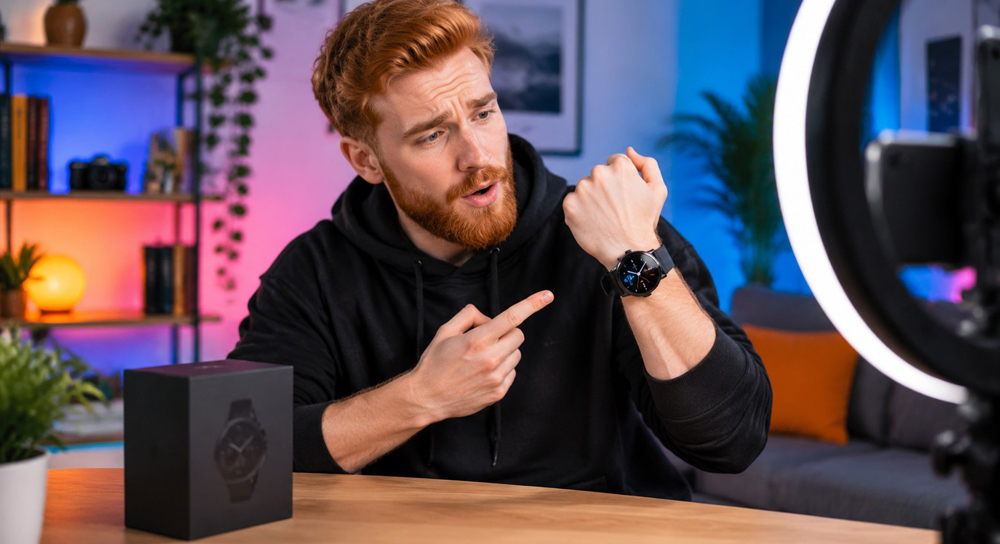
A review is not an integration with a short message like “here’s the product, it’s great, the link is in the description.” It’s an independent video or a significant part of an episode where the author thoroughly examines a product or service: tests it, looks at the details, compares it with alternatives, and shares their impressions and conclusions. This format is especially useful for categories where the purchase isn’t spontaneous: electronics, software, professional equipment, gadgets, as well as cosmetics, household goods, and hobbies. The viewer often comes to the review already at the stage of making a choice: “Will this laptop handle video editing?” “Should I replace my old smartphone?” “Will this cream suit an allergic person?”
A good review provides a much deeper and more vivid understanding than product descriptions and promotional videos. So how can we make this format natural and trustworthy, and what is truly important to control?
10 principles of an ideal review
1. First the goal – then the blogger
Let’s assume you’re a natural cosmetics brand and you’re planning a review. Everything is obvious: you need beauty bloggers. But… If the goal is to increase brand awareness, it makes more sense to look towards young authors who work with Generation Z. This is an active audience that is keen on eco‑themed content. If, however, you’re launching a new anti‑aging line, you should choose older authors. At the same time, if the goal is not just brand awareness but also to stimulate sales and, for example, to create UGC content with reviews, it’s better to narrow down the range of channels to micro‑ and mid‑tier ones, where the audience is as engaged and loyal to the blogger as possible.
In other words, before choosing a blogger, clearly define the parameters.
- What exactly is the review needed for: brand awareness, trust, leads, sales, handling objections?
- What will you consider a success: what KPIs (reach, engagement, conversions, leads, sales via promo code, growth in brand‑related searches)?
- Who is your target audience for this product and this goal: age, gender, geography, interests, purchasing power, level of familiarity with the category and brand, readiness to make a purchase?
Important point! If your main goal is to increase brand awareness, expand your target audience, generate demand for something new, and build trust… We strongly recommend avoiding direct links to purchase, especially those with a tag. Because a link to a product is a “Advertisement” label. And when the brand’s relationship with the audience is not yet very trusting (or is non‑existent), what’s needed is not advertising, but high‑quality engagement. Yes, this means giving up some share of traffic in the short term, but viewers will respond much more warmly to reviews without links. In the long run, this is more valuable for the brand.
2. Choose bloggers not based on the number of followers, but based on how well they align with your brand
We’ve already touched on this in the first point, but we’ll repeat it and never tire of repeating: the size of a blogger’s audience doesn’t determine the result. An author with a few thousand loyal viewers can bring you more value than someone with a million followers but “empty” reach.
What’s really important to look at:
- The channel’s theme and the regularity of publications.
- Social media and the audience, their purchasing power.
- Average views, reach, engagement (ER).
- Quality of comments: is there a lively dialogue, substantive questions?
- Previous reviews: do you like how the author describes things, how they test, how they draw conclusions?
- Check whether the feed contains reviews or advertisements from competitors (assess the risks of a conflict of interest).
- Reputation, the blogger’s overall tone of voice (whether it aligns with your brand).
Be sure to check the latest materials and delve a bit deeper, rather than just browsing the links suggested by the author (or their manager). Firstly, this will give you a real picture of views and engagement, rather than the channel’s records. Secondly, it sometimes happens that the positioning is one thing, but in reality the author has moved in a different direction, and that’s no longer your context.
3. Prepare a brief with facts, not a script with lines
Don’t make the blogger learn your texts. Don’t write ready‑made speeches. The author has their own voice, style, and connection with the audience, which trusts them precisely for that.
It is necessary to record the facts:
- The exact name of the product and model.
- What is included in the package.
- Who the product is designed for and what it is intended for.
- Functions that need to be tested.
- What to demonstrate visually: the gadget’s interface, the consistency of the cream, etc.
- Link, promo code, if applicable within the scope of the review.
- Stages and deadlines: for review, filming, editing, placement.
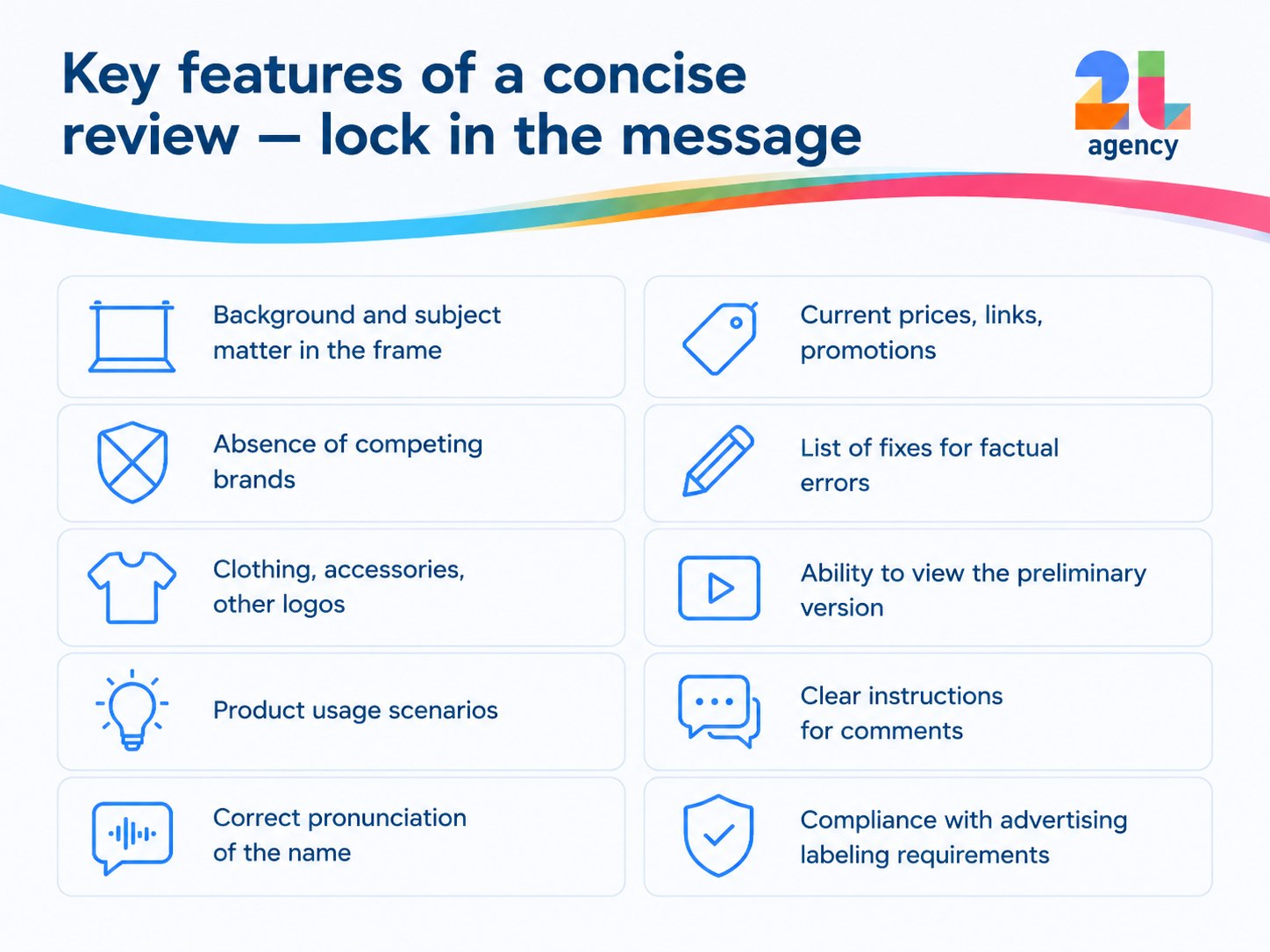
As with many things, there are nuances whose importance you only realize when you encounter them. For example, you ordered a review of a smart speaker: the author praises the sound and ease of use, but on the table behind you there’s a similar competitor model with a well‑recognizable logo. Formally, everything meets the requirements, but in practice, people will laugh at it in the comments. Anti‑advertising for your own money. Below is a guide that will help you avoid embarrassing mistakes.
4. Transfer the goods safely and in accordance with the contract
The terms for providing a sample to a blogger can vary. A small accessory is often given away permanently – as a bonus. The same, of course, applies to cosmetics. However, expensive equipment (laptop, TV, smart gadgets, etc.) is usually provided temporarily with the expectation of return or included in the fee for the review. In the latter case, it is essential to specify all the details and the parties’ responsibilities in the contract.
- for what period is it transferred,
- how the return shipment will be organized,
- penalties/actions in case of loss or damage to the property,
- the procedure to follow if a hidden/factory defect is detected.
And when transferring the product, draw up an act indicating:
- model,
- serial number,
- configuration,
- condition at the time of transfer.
5. Prepare for a negative scenario
Even a good product may not appeal to a particular person or may not perform well in their tests. There is always a risk – it’s worth acknowledging it and planning your actions in advance.
First, study the background:
- Check whether the author has published negative reviews before and how exactly they presented them.
- Look for mentions online of any disputes, scandals, or conflicts between the blogger and brands.
- Assess the overall reputation and communication style in the comments and on social media.
Then discuss and agree on a work plan that will minimize your risks. For example:
- The blogger receives and tests the product in accordance with the brief.
- If they identify any obvious flaws, issues, or defects, they report them, attaching photos, videos, or other evidence.
- The specialists review the materials: they verify compliance with the operating conditions and settings.
- If necessary, the brand provides advice or offers a replacement sample.
- Then, further work on the review is discussed.
Just don’t resort to pressure regarding the author’s opinion, and don’t ask to hide real shortcomings. The reputational damage from such stories is almost always greater than that from targeted, well‑founded criticism in a review.
6. Choose what to put in the video title

Nina Zinchenko, co‑owner and lead account manager at 2L:
Review titles can be divided into two types: direct ones — with the product name, and clickbait ones — based on emotions and intrigue. From experience, I can say that a direct title will yield significantly less reach. But these will be targeted views and a minimum of negative feedback. Clickbait will show reach, but there will be quick drop‑offs and more dissatisfied viewers.
“Testing coffee machine X” or “Honest review of smartphone Y” – these videos will be opened by people who are deliberately looking for information about such equipment. Clickbait options like “This is why I broke up with my girlfriend” or “The watch gave me a diagnosis” will attract more clicks, but the viewer will quickly realize that it’s not a personal story inside, but a product review, and will leave. But this doesn’t mean that clickbait is definitively worse. The question is what to focus on in a specific case, for a specific product, goal, and conditions – relevance or reach. If you choose the latter, plan ORM with comments right away.
7. Check the draft within the agreed boundaries
Check the working version while there’s still time to make any corrections. At the same time, stay within the previously agreed boundaries: you’ve already approved the author’s format and style when you selected them. Their opinion is their opinion, and the main strength of their review lies in its honesty. What you need to check are the facts and details: the product name, models, links, codes, labeling, and whether there are any other brands in the frame.
If the author has noted some shortcoming, that’s fine; the main thing is that the presentation is well‑reasoned and fits the context. For example, a robot vacuum cleaner is noticeably noisier than its competitors when it washes the brushes and disposes of the debris in the container. For some people, this is a disadvantage. But for a user for whom suction power and perfect cleanliness are the most important factors, the noise will be a clear, justified feature.
Material in which the author does not hide controversial aspects is more convincing than a overly sweet review that tries to present the product as perfect.
Check separately how the author added the link, if it was specified. Overall, it is appropriate in the review, but only as an informative addition, not as a call to action: not “Hurry, follow the link and buy,” but “Learn more about the new product here,” or something similar.
8. Consider not only sales but also “long‑term” metrics
Using a blogger’s promo code is a good indicator. But there are many others that are no less important in the long run:
- The number and average depth of views.
- Video saves, reposts.
- Clicks on links.
- Activity in comments, questions about the product.
- Mentions of the brand, product.
- Dynamics of branded search queries.
- Tone of the audience’s response.
9. Keep legal and reputational risks in mind
Before launching, check:
- Is the blogger’s channel registered in the media registry (if required by law)?
- Are the exclusivity terms (the period during which the blogger does not publish competitors’ ads) specified in the contract?
- Are there clauses regarding force majeure and “damage to business reputation”?
A thorough background check is also a good idea: the history of comments, likes, subscriptions, and mentions in the media and social media.
10. Plan for post‑publication support
Launching the review is not the end. In the first few days, it’s important to:
- Monitor comments and reactions, respond to questions promptly.
- If necessary, engage ORM support if disputes or negative feedback arise.
- Use the material in other channels: website, email, social media, advertising with an influencer.
This way, you “stretch” the viewing effect over time and get more value from a single piece of material.
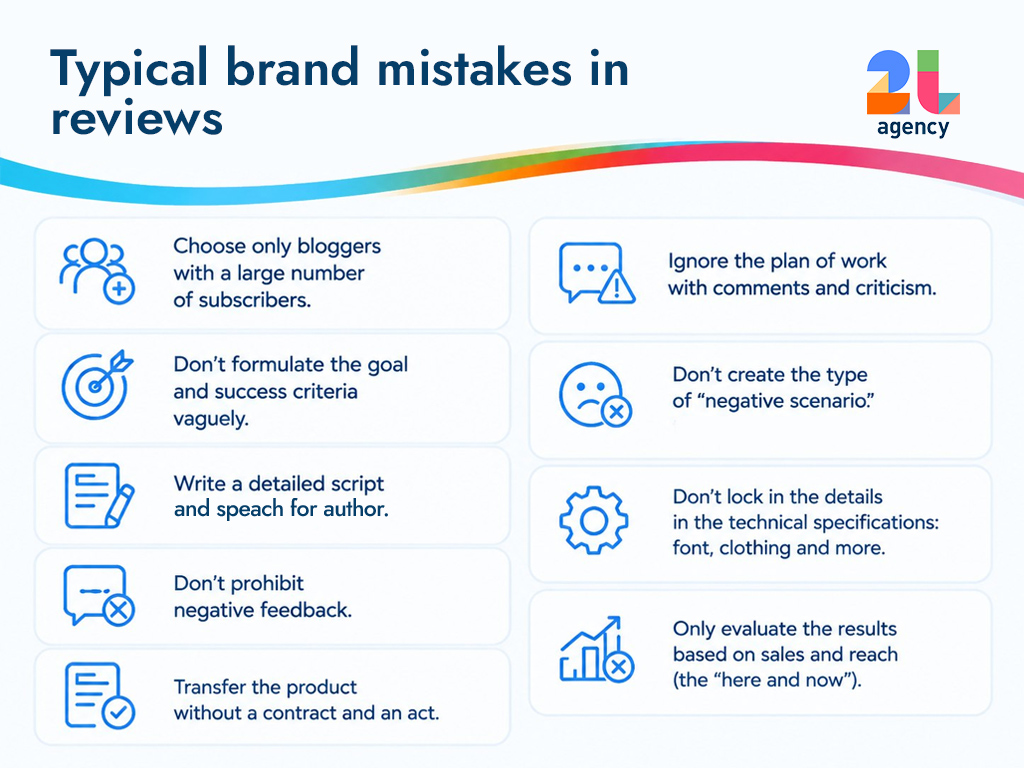
Let’s reinforce what has been said with a few short “anti‑tips” – things that most often devalue the format.
Where can I order an review from Russian bloggers?
Welcome. At the PR agency 2L, over the years we’ve conducted hundreds of reviews for bloggers for large and small brands: from selecting authors and preparing briefs to approving revisions and evaluating the results. If you need such material, come by — we’ll do it.
22.09.2026